
If you’ve ever spent weeks tapping through a language app and still couldn’t order a coffee in Madrid, you’re not the problem — the method was. Most Spanish for beginners programs dump vocabulary lists and grammar tables on you with no clear roadmap. You finish a lesson, feel good for five minutes, and forget everything by Thursday.
This guide is different. It’s a structured 90-day plan built around how your brain actually acquires language — with specific weekly milestones, daily 17-minute sessions, and honest checkpoints so you always know exactly where you stand. At Learn as little as 17 minutes per day, we designed this roadmap around the science of memory and practical conversation, not grammar theory you’ll never use at a tapas bar.
Let’s map out exactly what the next 90 days look like.
Your 90-Day Spanish Learning Journey: What to Expect
In 90 days of consistent 17-minute daily practice, you can reasonably expect to reach the lower end of CEFR A1 level — meaning you’ll introduce yourself, handle basic transactions, ask and answer simple personal questions, and participate in slow-paced conversations with patient speakers. That’s not a marketing promise; it’s what the research supports for focused, daily learners.
Here’s why 90 days is the right frame. Estimates suggest that reaching A1 level in Spanish requires roughly 70 to 150 hours of study, depending on method and intensity. At 17 minutes per day for 90 days, you’ll accumulate about 25.5 hours of focused study time. That won’t get you to a full A1 on its own — but here’s what most hour estimates miss: they assume passive classroom hours where half the time is spent on administrative overhead, waiting for other students, or zoning out. Focused, structured solo practice is far more efficient per minute than a group class.
The 90 days break into three distinct phases, each building on the last:
Weeks 1–4 (Foundation): You’ll learn your first 100 high-frequency words, nail basic pronunciation, and start recognizing patterns. The goal is building raw material for your brain to work with.
Weeks 5–8 (Building Blocks): You’ll combine those words into simple sentences, describe your daily routines, and start understanding how Spanish sentence structure differs from English. The goal is moving from isolated words to connected thoughts.
Weeks 9–12 (Conversation Ready): You’ll practice real exchanges — asking questions, responding to the unexpected, and handling basic social situations. The goal is turning knowledge into spontaneous communication.
Each phase has its own rhythm, and each one will feel different emotionally. More on that later — because the emotional journey matters more than most guides admit.
Weeks 1–4: Foundation Phase — Your First 100 Words
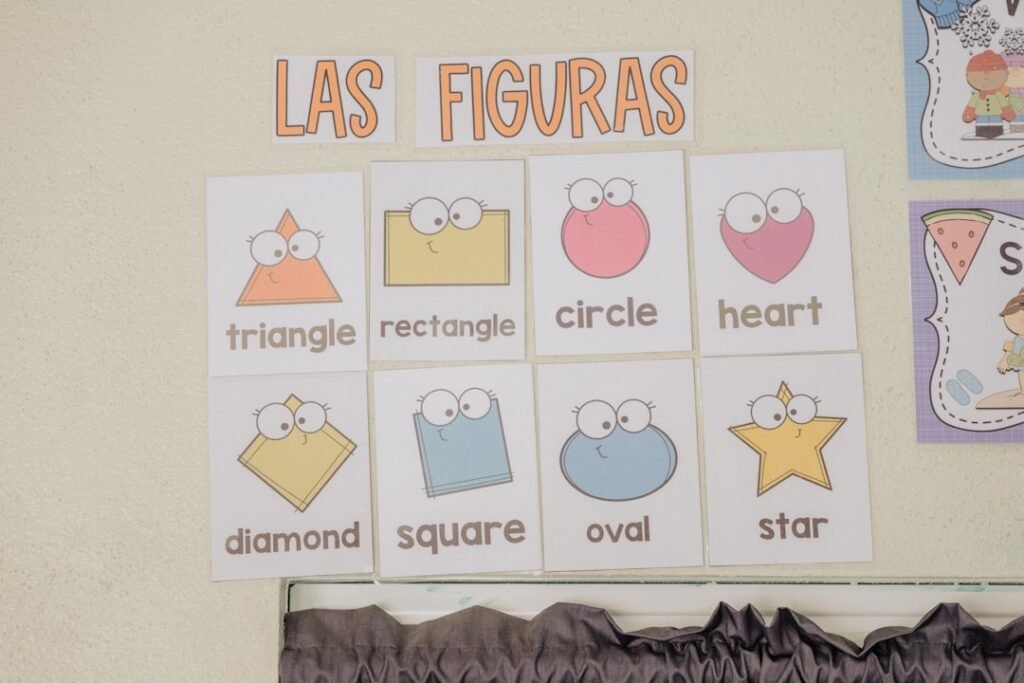
Your first month has one job: build a core vocabulary of 100 words that gives you disproportionate power in real conversations. Not random textbook vocab — the specific words that show up again and again in everyday spoken Spanish.
Why 100 words? Because of a principle linguists and researchers consistently confirm: a small percentage of any language’s vocabulary accounts for the vast majority of daily speech. Research on the Spanish language has shown that learning the first 1,000 most frequently used words familiarizes you with approximately 87.8% of vocabulary in oral speech. Your first 100 words are the foundation of that foundation — the words you’ll hear and use in virtually every conversation.
Here’s how those 100 words break down by category, and why each category matters:
| Category | Word Count | Examples | Why These Matter |
|---|---|---|---|
| Greetings & Courtesy | 10 | hola, adiós, gracias, por favor, perdón, buenos días, buenas tardes, buenas noches, de nada, disculpe | Every single interaction starts and ends here. These are your social passport. |
| Pronouns & Articles | 12 | yo, tú, él, ella, nosotros, ellos, el, la, los, las, un, una | These are the „glue words“ that appear in nearly every sentence you’ll ever hear or speak. |
| Essential Verbs | 15 | ser, estar, tener, hacer, ir, querer, poder, saber, hablar, comer, beber, vivir, trabajar, necesitar, gustar | These 15 verbs cover the core actions of daily life: being, having, going, wanting, knowing, eating, living, working. |
| Question Words | 8 | qué, quién, dónde, cuándo, cómo, cuánto, por qué, cuál | Questions drive conversations forward. Without these, you can only make statements — never ask for help or information. |
| Numbers & Time | 15 | uno through diez, cien, hoy, mañana, ayer, ahora | Ordering food, telling time, understanding prices, making plans — numbers and time words make you functional. |
| Connectors & Prepositions | 10 | y, o, pero, porque, con, sin, en, de, a, para | These let you connect ideas and form actual thoughts instead of just saying isolated words. |
| Everyday Nouns | 15 | agua, comida, casa, baño, dinero, trabajo, familia, amigo, calle, tienda, hotel, restaurante, mesa, cuenta, médico | The physical world you need to navigate: food, shelter, money, people, places. |
| Adjectives & Descriptions | 10 | bueno, malo, grande, pequeño, mucho, poco, nuevo, viejo, caliente, frío | Descriptions turn one-word utterances into meaningful communication. „Water“ vs. „cold water“ is the difference. |
| Days of the Week | 7 | lunes, martes, miércoles, jueves, viernes, sábado, domingo | Planning anything — from meetups to travel — requires knowing the days. |
Notice what’s not on this list: colors (rarely urgent in real conversation), months of the year (you can point at a calendar), and body parts (unless you need a doctor, and „médico“ is already on the list). Every word earns its place by being immediately useful.
Here’s a hidden advantage if you’re an English speaker: Spanish and English share Latin roots, which means hundreds of words are already familiar to you. Words like „hotel,“ „restaurante,“ „doctor,“ „animal,“ and „hospital“ are spelled the same or nearly the same in both languages. These are called cognates, and they effectively give you a head start on vocabulary before you study a single flashcard.
Week-by-Week Foundation Breakdown
Week 1: Learn greetings, courtesy words, and pronouns (22 words). Practice pronunciation daily. By Friday, you should be able to greet someone, thank them, and apologize — the three most socially important skills.
Week 2: Add essential verbs and question words (23 words). Start combining: „Yo quiero agua“ (I want water), „¿Dónde está el baño?“ (Where is the bathroom?). You’re now forming your first mini-sentences.
Week 3: Add numbers, time words, and connectors (25 words). Practice: „Quiero dos cervezas, por favor“ (I want two beers, please). You can now handle basic transactions.
Week 4: Add everyday nouns, adjectives, and days of the week (32 words). By month’s end, you can describe basic needs, ask where things are, and navigate simple daily situations.
Weeks 5–8: Building Blocks — Simple Sentences and Daily Routines
Month two transforms isolated words into connected thoughts. You already have the raw ingredients — now you learn to cook. The focus shifts from vocabulary acquisition to sentence construction and practical routines.
This is where your daily sessions start to feel more like actual language use and less like memorization. Here’s the week-by-week plan:
Week 5: Describing Yourself and Others
Focus on using „ser“ and „estar“ (both mean „to be“ but in different contexts) to talk about identity and states. Practice saying your name, age, nationality, and profession. Example sentences to build: „Soy americano. Tengo treinta años. Soy ingeniero.“ (I’m American. I’m thirty years old. I’m an engineer.) You’ll also learn why „Estoy bien“ (I’m well) uses a different verb than „Soy americano“ — a distinction that doesn’t exist in English but becomes intuitive with practice.
Week 6: Your Daily Routine in Spanish
Describe your morning, afternoon, and evening using present tense verbs. This is where vocabulary and grammar merge naturally. Build sentences like: „Por la mañana, yo como pan y bebo café. Trabajo en una oficina. Por la noche, como con mi familia.“ (In the morning, I eat bread and drink coffee. I work in an office. At night, I eat with my family.) You’re now creating three-to-five-sentence narratives — a major milestone.
Week 7: Asking and Answering Questions
Conversation is a two-way street. This week, practice question-and-answer pairs: „¿De dónde eres?“ / „Soy de Nueva York.“ „¿Qué haces?“ / „Soy profesor.“ „¿Te gusta el café?“ / „Sí, me gusta mucho.“ These exchanges are the backbone of every get-to-know-you conversation in any language.
Week 8: Handling Real Situations
Practice scenario-based conversations: ordering at a restaurant, asking for directions, checking into a hotel, buying something at a shop. Each scenario uses the vocabulary and sentence structures from the previous seven weeks. Example: „Buenas tardes. Una mesa para dos, por favor. Quiero la sopa y un agua, por favor. ¿Cuánto es la cuenta?“ (Good afternoon. A table for two, please. I want the soup and a water, please. How much is the bill?)
By the end of Week 8, you should be able to survive — not thrive, but genuinely survive — basic daily situations in a Spanish-speaking environment.
Weeks 9–12: Conversation Ready — From Phrases to Fluid Exchange
The final month is where you stop sounding like a textbook and start sounding like a person. You shift from rehearsed phrases to spontaneous communication — handling the unexpected, expressing opinions, and recovering gracefully when you don’t understand something.
Week 9: Past Tense Basics
You can’t only talk about right now. Learn the most common past tense forms of your core verbs: „Fui al supermercado“ (I went to the supermarket), „Comí con mi amigo“ (I ate with my friend), „Hablé con mi familia“ (I talked with my family). You don’t need to master every irregular conjugation — just learn the past forms of the 10 verbs you use most.
Week 10: Expressing Opinions and Preferences
Move beyond facts into thoughts. Practice: „Creo que…“ (I think that…), „Me gusta más…“ (I prefer…), „No me gusta…“ (I don’t like…). This is where conversations become genuinely interesting, because you’re sharing who you are — not just what you need.
Week 11: The Art of Not Understanding
This might be the most important week. Real conversation means you will encounter words and phrases you don’t know. Learn the phrases that keep the conversation alive: „¿Puede repetir, por favor?“ (Can you repeat, please?), „Más despacio, por favor“ (Slower, please), „¿Qué significa eso?“ (What does that mean?), „No entiendo“ (I don’t understand). These aren’t signs of failure — they’re the tools fluent speakers use every day.
Week 12: Putting It All Together
Your final week is full integration. Practice 5-minute conversations covering introductions, daily routines, past experiences, and opinions. Try to have an actual conversation with a native speaker — whether through a language exchange app, a local meetup, or a tutor. This is your graduation exam, and the grading criteria is simple: can you keep a basic conversation going for 3–5 minutes?
Daily 17-Minute Session Plans for Each Phase
Seventeen minutes isn’t arbitrary — it’s the sweet spot where focused attention meets realistic scheduling. Most people can carve 17 minutes out of any day, and a session that short eliminates the „I don’t have time“ excuse that kills most language learning attempts. Here’s exactly how to structure each session across the three phases.
Phase 1 Sessions (Weeks 1–4): Vocabulary Acquisition
Minutes 1–2: Review. Quickly run through yesterday’s words using flashcards or a spaced repetition app. This is critical — without review, research on the forgetting curve shows that people can lose up to 50–70% of new information within 24 hours. Those two minutes of review are the highest-return investment in your entire session.
Minutes 3–7: New vocabulary. Learn 3–5 new words. Don’t just read them — say them out loud, use them in a simple phrase, and visualize the thing or action they describe. For example, when learning „agua“ (water), say „Quiero agua“ while picturing yourself asking for a glass of water.
Minutes 8–12: Pronunciation practice. Listen to native audio of your new words and today’s review words. Repeat each one three times, focusing on sounds that don’t exist in English (the rolled „rr,“ the soft „d“ between vowels, the „j“ sound). Record yourself and compare.
Minutes 13–17: Active production. Without looking at notes, try to say 5 simple sentences using today’s words combined with words you already know. Speak out loud, even if you’re alone. This is where passive knowledge becomes active ability.
Phase 2 Sessions (Weeks 5–8): Sentence Building
Minutes 1–3: Spaced review. Review vocabulary from Phase 1 using spaced repetition. By now, your early words should need less frequent review — that’s the system working.
Minutes 4–9: Sentence construction. Take a scenario (ordering food, describing your day, introducing yourself) and build 5–7 sentences around it. Write them down, then say them out loud without reading.
Minutes 10–14: Listen and shadow. Listen to a short native Spanish clip (a podcast intro, a YouTube video, a dialogue from a learning app) and try to repeat what you hear. Don’t worry about understanding every word — focus on rhythm, intonation, and the „music“ of the language.
Minutes 15–17: Self-conversation. Pick a topic and talk to yourself in Spanish for two minutes straight. Describe what you see around you, narrate your morning, or explain what you plan to do tomorrow. This builds the spontaneity muscle that separates people who „know Spanish“ from people who can actually speak it.
Phase 3 Sessions (Weeks 9–12): Conversation Practice
Minutes 1–2: Quick-fire review. Run through 20 flashcards at speed. By now, most should feel automatic.
Minutes 3–10: Dialogue practice. Work through a scripted conversation, then improvise variations. For example, practice a restaurant scenario, then change the details: different food, a complaint about the order, asking for a recommendation. Each variation forces your brain to adapt rather than just recite.
Minutes 11–15: Response training. Have someone (or an app) ask you random questions in Spanish, and answer as quickly as you can. Speed matters here — you’re training your brain to produce Spanish without translating from English first.
Minutes 16–17: Reflection. In Spanish, say one thing you learned today and one thing you found difficult. This builds metacognitive awareness — your brain gets better at learning when it thinks about how it’s learning.
Progress Checkpoints: You Should Be Here by Now
One of the most frustrating things about learning Spanish as a beginner is not knowing whether you’re on track. Are you behind? Ahead? Is it normal to forget half the words you learned last week? These checkpoints give you honest benchmarks — not to stress you out, but to reassure you that your progress is real, even when it doesn’t feel like it.
Day 14 Checkpoint
You should be able to: Greet someone and respond to a greeting. Say „please,“ „thank you,“ and „excuse me“ without hesitation. Know all personal pronouns. Recognize (not necessarily produce) about 40 words. Say 3–5 very simple phrases from memory.
Normal at this stage: Mixing up „el“ and „la.“ Forgetting words you learned three days ago. Feeling like you’re not making progress. You are — your brain is building neural pathways that haven’t solidified yet.
Day 30 Checkpoint
You should be able to: Know roughly 100 words (not perfectly, but recognize and use most of them). Ask basic questions: where, what, how much. Order food or drink. Count to 20. String together 2–3 word phrases naturally.
Normal at this stage: Pronunciation that still sounds distinctly foreign. Struggling with verb conjugations. Understanding written Spanish better than spoken Spanish. Feeling like you know „a lot of words but can’t speak.“ This is completely normal — comprehension always outpaces production.
Day 60 Checkpoint
You should be able to: Describe yourself in 5+ sentences. Talk about your daily routine. Have a very basic back-and-forth conversation (with a patient partner). Understand the gist of simple spoken Spanish at a slow pace. Recognize common verb patterns even if you can’t name the grammar rule.
Normal at this stage: Feeling like you’ve „plateaued.“ Noticing how much you don’t know (this is actually a sign of progress — beginners don’t know what they don’t know). Occasional days where Spanish feels harder than it did two weeks ago. This is your brain reorganizing information, not losing it.
Day 90 Checkpoint
You should be able to: Hold a 3–5 minute conversation with a patient native speaker. Talk about the past (basic events), the present (routines, preferences), and the near future (plans). Navigate a restaurant, hotel, or shop in Spanish. Understand simple spoken Spanish at a natural-but-slow pace. Express opinions using „I think,“ „I like,“ „I prefer.“
Normal at this stage: Still making grammar mistakes in almost every sentence (and that’s fine). Understanding about 60–70% of a simple conversation. Needing to ask people to slow down or repeat themselves. Feeling simultaneously proud of how far you’ve come and impatient about how far you have to go.
The Emotional Side: What’s Normal When Learning Spanish

No one talks about this enough: learning a language is an emotional rollercoaster, and the feelings you experience are just as predictable as the vocabulary milestones. Knowing what’s coming emotionally prepares you to push through the moments when most people quit.
Week 1–2: The Honeymoon
Everything is new and exciting. You’re learning words fast, every session feels productive, and you might even think, „Why didn’t I do this sooner?“ Enjoy this feeling — it’s real, and the progress is real. But know that it won’t always feel this easy.
Week 3–4: The First Wall
The novelty wears off. You start forgetting words you thought you’d mastered. Verb conjugations feel impossible. You might hear a native speaker and think, „I’ll never be able to speak that fast.“ This is the single biggest dropout point for language learners. The people who push through this wall are the ones who reach conversation level. The people who don’t push through start over with a different app six months later.
What helps: Lower your expectations for this period. You’re not regressing — you’re consolidating. Your brain is sorting, categorizing, and strengthening neural connections. It just doesn’t feel like learning because the output hasn’t caught up with the input yet.
Week 5–8: The Competence Gap
You know enough to realize how much you don’t know. You can recognize words in a conversation but can’t respond fast enough. You can read a menu but freeze when the waiter asks „¿Algo más?“ (Anything else?). This gap between understanding and producing is painful — but it’s proof you’re growing. Every fluent speaker has passed through this exact stage.
Week 9–12: The First Breakthroughs
Suddenly, words start coming without conscious translation. You catch yourself thinking a Spanish word before the English one. You understand a sentence a native speaker says and respond correctly — and the surprise on your own face is priceless. These moments are small but transformative. They’re the reward for every frustrating session in Weeks 3 and 4.
The key insight: fluency isn’t a light switch. It’s a dimmer. You get a little more fluent every day, and the progress is so gradual that you often can’t see it until you look back at where you were a month ago. Keep a language journal. Write down what you could do on Day 1, Day 30, and Day 60. On Day 90, you’ll be stunned by the difference.
Your Next Steps After 90 Days
Day 90 isn’t the end — it’s the beginning of what becomes genuinely fun. You now have enough Spanish to learn from Spanish: watching shows with Spanish subtitles, reading simple articles, having real conversations with native speakers. The hard part — building from zero — is behind you.
Here’s where to focus next:
Expand your vocabulary to 500 words. You’ve got 100. The next 400 come faster because you now have a framework to attach them to. Focus on words related to your specific interests and needs — your job, your hobbies, your travel plans.
Start consuming Spanish content daily. Even five minutes of a Spanish podcast or a few pages of a graded reader will accelerate your learning dramatically. Your brain needs input — lots of it — to keep building patterns.
Find conversation partners. Nothing replaces real human interaction. Language exchange apps, local Spanish meetups, or online tutors give you the practice that no app can simulate.
Keep your 17-minute daily habit. The consistency that got you here is the same consistency that will carry you to full conversational fluency. Don’t abandon the structure that works — evolve it. Explore how Learn as little as 17 minutes per day can help you continue building on this foundation with sessions designed around proven superlearning technology that adapts to your pace and your goals.
You’ve spent 90 days proving to yourself that you can learn Spanish. The next 90 days are about proving to everyone else. Your roadmap is set, your first 100 words are waiting, and every 17-minute session moves you measurably closer to real conversation. The only step left is the first one.